
(Re)Connecting Communities with their Heritage in Assynt
Taking the archive into the community — and the community back into the landscape
(Re)Connecting Communities with their Heritage in Assynt is a year-long Historic Assynt project designed to reconnect people across Assynt with the places, stories, archaeology and archive collections that make up our shared heritage.
The project is based around Historic Assynt’s Community Archive at the Old Kirk, Inchnadamph, but from the outset its purpose was to take the archive out into the communities of Assynt, making it easier for people to explore what we hold, contribute their own knowledge and help determine what Historic Assynt investigates next.
The project runs from April 2026 to March 2027 and has been made possible with support from the North Highland Initiative Community Infrastructure Support Programme.
With thanks to the North Highland Initiative for supporting (Re)Connecting Communities with their Heritage in Assynt.
Why (Re)Connecting?
Historic Assynt was established in 1997, initially in response to the need to conserve some of Assynt’s most important historic sites, including the Old Kirk at Inchnadamph, Ardvreck Castle and Calda House.
The Old Kirk subsequently became home to Assynt’s Community Archive.
As we approached the twentieth anniversary of the archive opening, we wanted to think again about what a community archive could be.
Rather than simply asking people to travel to Inchnadamph to consult records, could we take those records into different communities? Could historic maps, photographs, estate records and archaeological reports become the starting point for conversations? And could those conversations lead to people actively researching, recording and caring for their own heritage?
That idea became (Re)Connecting Communities with their Heritage in Assynt.
A community-led approach
The project builds upon earlier consultation by Historic Assynt.
A community survey undertaken in 2023 asked people what aspects of Assynt’s heritage they wanted to see explored and what activities they would find valuable. Among the interests identified were cultural events, oral and local histories, excavation, field survey and virtual interpretation, alongside demand for practical skills including surveying, excavation, photogrammetry, GIS, desk-based research and oral-history recording.
The principle behind the new project was therefore simple:
begin with the archive, listen to the community, and allow what we learn to shape what happens next.
The project was designed to create opportunities to:
- explore Assynt’s archive and historic records;
- share local knowledge, memories and photographs;
- strengthen connections between people and place;
- learn practical heritage and archaeological skills;
- identify sites and subjects the community would like investigated;
- improve the recording and understanding of Assynt’s heritage;
- create opportunities for volunteering and participation; and
- build towards a sustainable programme of community archaeology and heritage activity.
The original project plan deliberately linked community engagement with later archaeological workshops and field activity, rather than treating the initial events as an end in themselves.
Stage 1 — Taking the Archive on the Road
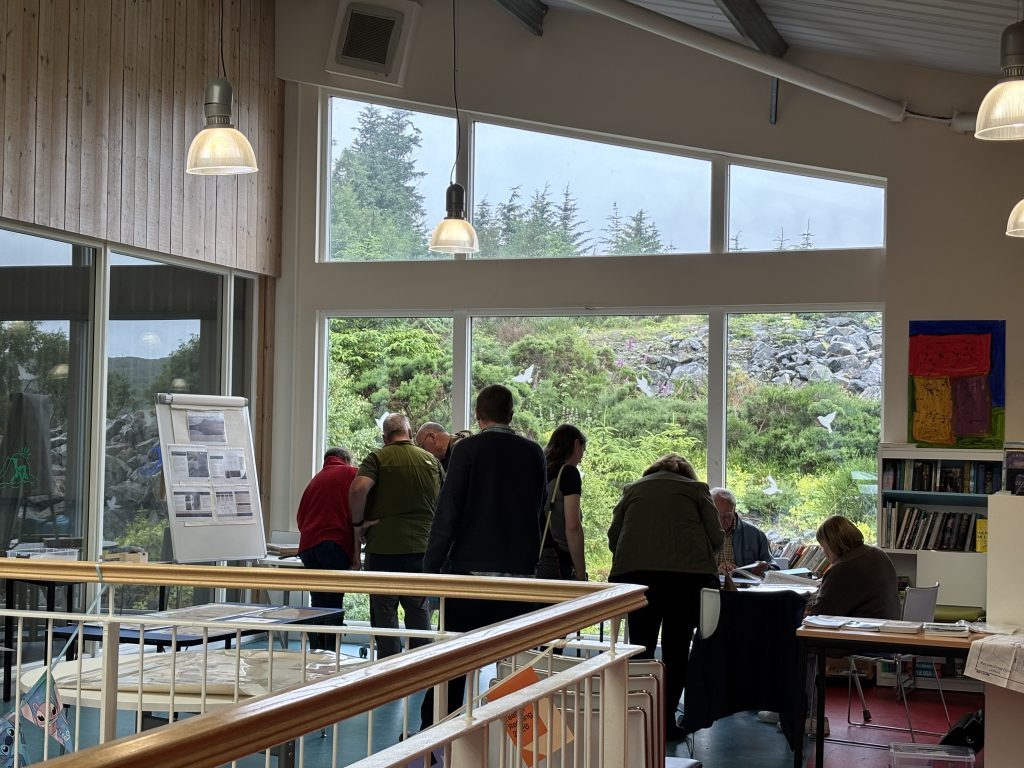
The first public stage of the project was a series of Community Archive Roadshows held across Assynt during summer 2026.
Rather than expecting people to come to the archive, Historic Assynt took a selection of the archive to local venues.
The Stage 1 programme
Elphin Village Hall – 27 June 2026
Assynt Leisure Centre, Lochinver – 1 July 2026
Stoer Village Hall – 4 July 2026
Drumbeg Village Hall – 8 July 2026
Unapool @ The Rock Stop – 22 July 2026 (In partnership with the Northwest GeoPark)


These were followed by additional summer openings of the Old Kirk Community Archive at Inchnadamph.
Each event was deliberately informal and drop-in. Visitors could stay for a few minutes or spend much longer exploring the material — in practice, the average visit was around an hour.
What did we take with us?
At the centre of each event were materials that allowed people to move backwards and forwards between the landscape they know today and the landscape recorded in the archive.
These included:
- historic maps, including eighteenth and nineteenth-century mapping;
- estate and croft tenancy records;
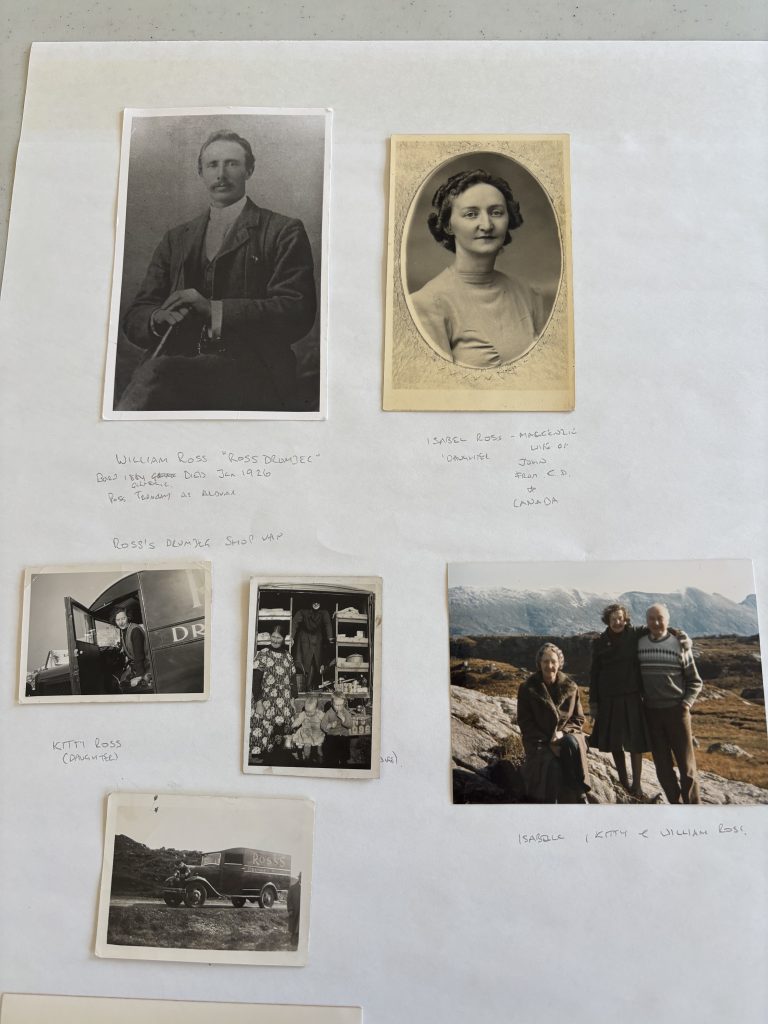
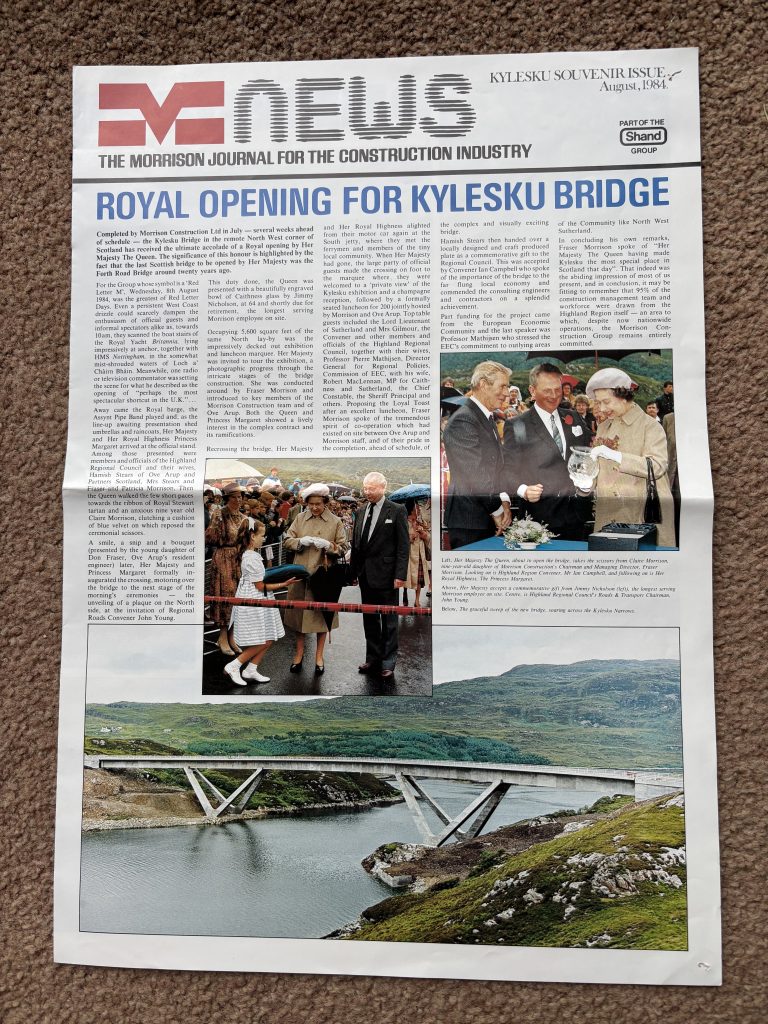
- archive photographs and documents;
- archaeological reports and research;
- objects from the Historic Assynt collection;
- material relating to Ardvreck Castle and the Historic Assynt cannons;
- local displays tailored to the area hosting each roadshow; and
- maps on which visitors could identify places, features and stories known to them.
Children and families were also encouraged to engage with heritage through drawing, map-based activities and opportunities to think about their own connection to Assynt.
What did Stage 1 tell us?
Stage 1 was not simply an exhibition programme. It was designed as a listening and evidence-gathering exercise.
The events demonstrated a strong appetite for interacting directly with original material rather than simply viewing finished interpretation.
Historic maps proved particularly effective at starting conversations. People used them to locate former houses, townships, routes and remembered features, often adding information that does not appear in the formal archaeological record.
Croft and estate records generated considerable interest, particularly where visitors could trace individual families or holdings.
Objects and archaeological material provided another route into the past, often prompting questions about how we know what an object is, where it was found and what its context can tell us.
Perhaps most importantly, conversations quickly moved from:
“What do you have in the archive?”
to:
“Could we investigate this?”
That transition is exactly what the project was designed to encourage.
Stage 1 — Outputs and Legacy
The most important output of Stage 1 has not been a single exhibition or report. It has been the beginnings of a pipeline from archive → community knowledge → research → practical activity → permanent record.
Several clear strands emerged.
New knowledge for the archive
Visitors contributed memories, place names, family information and knowledge of individual sites and landscapes.
This material can now be incorporated into ongoing Historic Assynt research rather than being lost when individual memories disappear.
New research questions
Community conversations identified subjects and places people wanted to investigate further.
These have directly informed the next stage of the project.
Evidence of demand for practical activity
People did not simply want to hear about archaeology. There was considerable interest in learning how to do it.
That has influenced the move towards workshops in map research, landscape survey, photography, monument recording and other practical archaeological techniques.
Wider access to the archive
The roadshows demonstrated that taking material into different settlements can reach people who may never otherwise visit the Old Kirk.
That principle will continue alongside regular archive opening.
Developing the digital archive
One of the project’s longer-term ambitions was to improve access to Historic Assynt’s collections digitally.
The development of this website — including pages devoted to individual places, monument types, archive collections and research — has become an important part of that legacy.
Material which previously existed as separate reports, photographs, plans or files can increasingly be brought together around the place or story to which it belongs.
A methodology for future community archaeology
Stage 1 also helped us test how Historic Assynt can combine:
archive material + historic mapping + local knowledge + structured archaeological recording.
That approach now underpins much of the work planned for the next stage.
From Stage 1 to Stage 2
The original project plan envisaged a progression from community engagement into archaeological workshops and field activities, with local participants learning research and recording techniques before putting them into practice in the landscape.
That is now happening through Stage 2.
The next programme takes several of the subjects and places highlighted through our earlier work and develops them into practical community heritage activities — combining archive research, local knowledge, specialist partners and field skills.
Stage 2 includes work around:
Croft Biographies at Elphin
Using historic mapping, estate records and community knowledge to trace the histories of individual crofts.
Kylesku — Geology & Archaeology
Exploring how geology, archaeology and human settlement can be read together in the landscape.
Drumbeg & Nedd
Moving from maps and archive research into landscape survey, photography and monument recording.
Fishing in Assynt
Bringing archives, film, memories and contemporary maritime heritage together to record the changing story of fishing and Lochinver harbour.
Community Archaeology & Metal Detecting
Exploring how metal detecting can be used responsibly as a structured archaeological survey technique.
Clachtoll Cold War Bunker
Using documentary research and field recording to investigate a much more recent part of Assynt’s archaeological landscape.
Where are we heading?
(Re)Connecting Communities was always intended to be more than a one-year programme.
In the original project proposal we described it as a springboard towards wider heritage activity, potentially including a future community archaeological field school.
Stage 1 has begun reconnecting people with the archive.
Stage 2 begins giving people the tools to investigate and record what lies beyond it.
The longer-term ambition is to create a sustainable model in which Historic Assynt can support people to move between:
Discover → Research → Learn → Record → Share → Protect
That means the archive is not simply somewhere that stores Assynt’s past.
It becomes one of the places from which its next discoveries begin.
Supported by the North Highland Initiative
(Re)Connecting Communities with their Heritage in Assynt has been supported by the North Highland Initiative through its Community Infrastructure Support Programme.
Their support has helped Historic Assynt take the Community Archive out across Assynt, make activities accessible in local venues and develop the programme from community engagement towards practical heritage skills and fieldwork.
Historic Assynt gratefully acknowledges the support of the North Highland Initiative.