
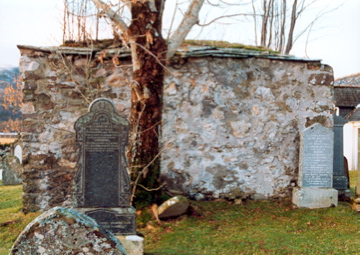
Burial place of the MacLeods of Assynt
Within the churchyard at Inchnadamph stands the MacLeod Vault, the burial place associated with the MacLeods of Assynt.
The family are more readily associated with nearby Ardvreck Castle, their stronghold on Loch Assynt, but the vault reveals another side of their history.
Ardvreck was a place of residence and power. Inchnadamph was a place of worship, burial and remembrance.
Together, the castle, church and vault form part of the same historic landscape.
The Vault at a glance
Place: Inchnadamph
Site type: Burial vault
Associated family: MacLeods of Assynt
Setting: Inchnadamph Old Parish Churchyard
Broad date: Around 1600
Related places: Ardvreck Castle and Inchnadamph Old Kirk
The MacLeods of Assynt
For generations, the MacLeods were one of the principal families in Assynt.
Their political centre was Ardvreck Castle, where the chiefs lived and from where their territory was controlled.
But like other leading Highland families, their identity was expressed through more than a residence.
Churches, burial places and memorials were equally important.
The presence of the MacLeod Vault at Inchnadamph therefore links the family directly with the parish church and with a religious site whose history stretches back into the medieval period.
Two places, one family story
Ardvreck Castle
The political and residential centre of the MacLeods of Assynt.
Inchnadamph
A place of worship, burial and memory.
A burial place beside the parish kirk
The vault stands within the historic churchyard surrounding the Old Kirk. It’s location is important.
Burial close to a parish church carried both religious and social meaning, and prominent families often occupied distinctive burial places within or beside churchyards.
The MacLeod Vault is therefore not simply an isolated structure. It forms part of the wider story of the churchyard and its use over generations.
Historic Assynt’s archaeological records broadly date the surviving vault to around 1600.

Reading the building
The surviving structure is modest compared with Ardvreck or Calda, but that is part of its character.
Look closely
When visiting the vault, look at:
- its position within the churchyard;
- the relationship between the vault and the Old Kirk;
- the surviving stonework;
- the doorway and enclosed burial space;
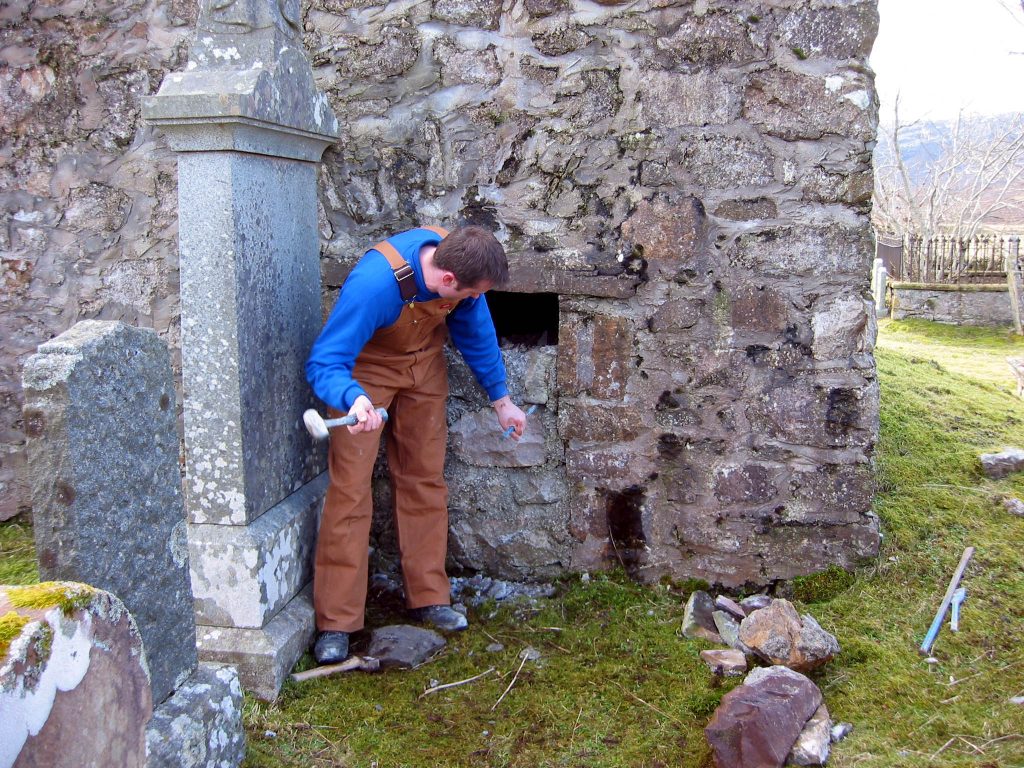
- later repairs and consolidation.
Burial, ancestry and memory
Burial places such as the MacLeod Vault helped maintain connections between generations.
For a family whose history was closely tied to Ardvreck and the wider Loch Assynt landscape, burial at Inchnadamph created another enduring point of identity.
The vault therefore helps us move beyond the dramatic events usually associated with the MacLeods — clan conflict, Montrose and the siege of Ardvreck — and consider the family in a more personal context.
They lived here.
They worshipped within this landscape.
And they chose to remember their dead here.
The churchyard around the Vault
The MacLeod Vault sits within a much larger burial ground.
The surrounding gravestones and memorials record generations of people connected with Assynt, while the churchyard itself has developed over a long period.
This means the MacLeod family story is set within a broader community history rather than standing apart from it.
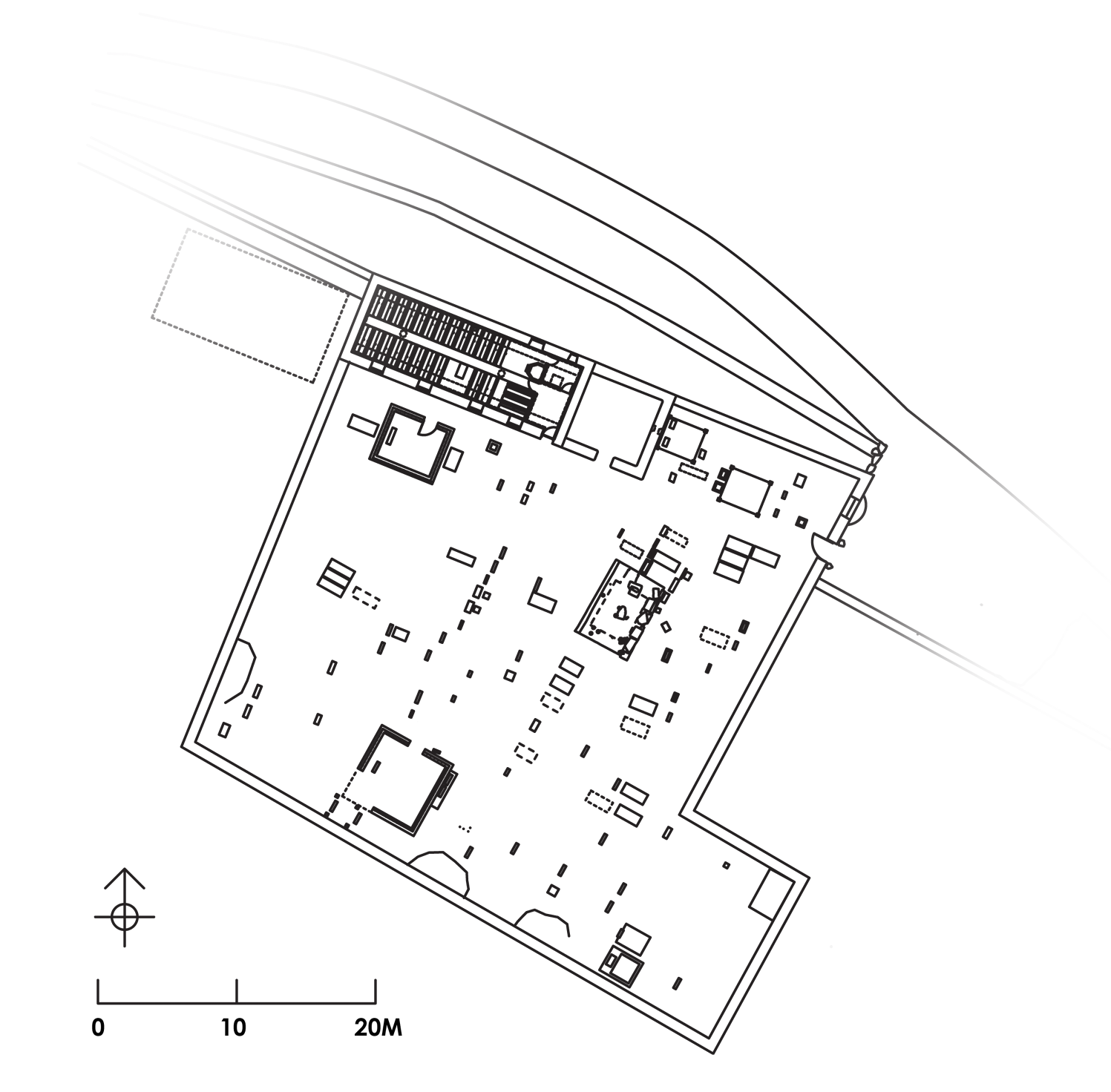
Work is ongoing to digitalise the information relating to the wider graveyard.
The Old Kirk
Beside the vault stands Inchnadamph Old Parish Kirk.
The present church dates mainly from the eighteenth century, but the site itself has much earlier religious origins.
The presence of the MacLeod burial vault therefore connects directly with the longer ecclesiastical history of Inchnadamph.
Ardvreck and Inchnadamph
Ardvreck Castle, the MacLeod Vault and the Old Kirk are all part of one story.
The distance between them is relatively small, but historically their functions were very different:
Ardvreck Castle — residence, authority and defence.
The parish kirk — worship and community life.
The MacLeod Vault — burial and family memory.
Seeing them together helps us understand the landscape around Loch Assynt as a network of connected places rather than a collection of isolated monuments.
After the MacLeods
The MacLeods eventually lost control of Assynt to the Mackenzies during the seventeenth century.
Their political centre at Ardvreck passed into new hands, and later Calda House replaced the castle as the principal residence of Assynt’s lairds.
The vault, however, remained.
Saving the MacLeod Vault
By the late twentieth century, the historic buildings around Inchnadamph and Loch Assynt were increasingly vulnerable.
Historic Assynt’s major conservation programme initially focused on the Old Kirk, Ardvreck Castle and Calda House. Conservation of those buildings was followed by work to the churchyard walls and MacLeod burial vault.
This ensured that the vault remained part of the historic landscape rather than continuing towards collapse.


A surviving connection
The MacLeod Vault is a small monument with a large story.
It connects the MacLeods of Ardvreck with the religious life of Inchnadamph and preserves a tangible link with a family that shaped the history of Assynt for centuries.
Its importance lies not in dramatic architecture, but in what it represents: family, place and memory.
Explore the story
The development of a castle, MacLeod’s to Mackenzies.
Discover the settlement and agricultural landscape surrounding Ardvreck and Calda.
The mansion that replaced Ardvreck as the residence of Assynt’s lairds.