

Assynt’s Secret War
Britain’s Secret Underwater Weapons at Loch Cairnbawn
During the Second World War, the sheltered waters of Loch Cairnbawn — Loch a’ Chàirn Bhàin — became one of the Royal Navy’s most secret testing and training areas.
Here, engineers, submariners and specialist crews developed and practised using revolutionary underwater craft designed to attack enemy shipping and heavily defended naval bases.
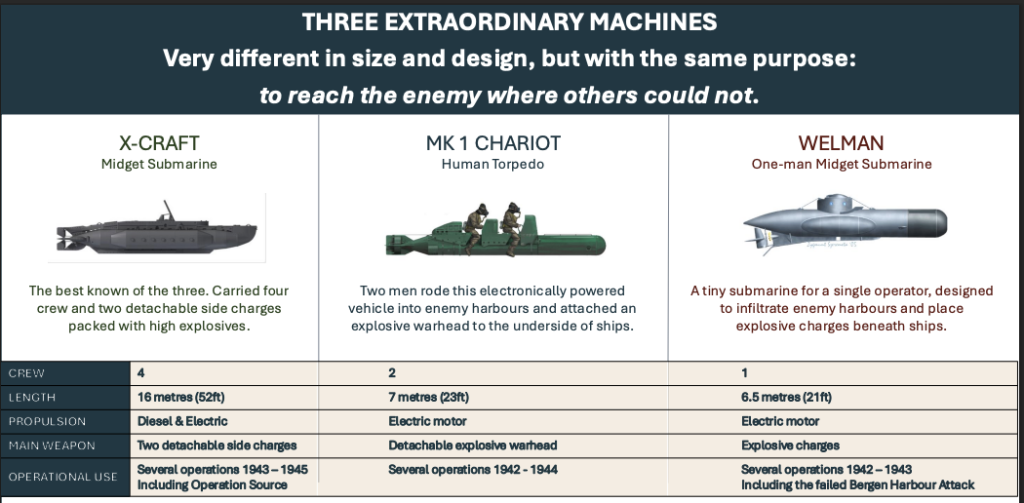
Among the unusual vessels tested in these waters were the X-Class, Chariot and Welman submarines.
Three very different solutions to the same problem: how to strike targets that conventional ships and submarines could not reach.
Why Loch Cairnbawn?
The Royal Navy selected Loch Cairnbawn because it offered an almost ideal natural training environment.
Its advantages included:
- a deep, sheltered sea loch with strong currents;
- steep surrounding hills;
- a remote and secure location with little civilian traffic;
- direct access to the Minch and open sea;
- conditions similar in some respects to the Norwegian fjords.
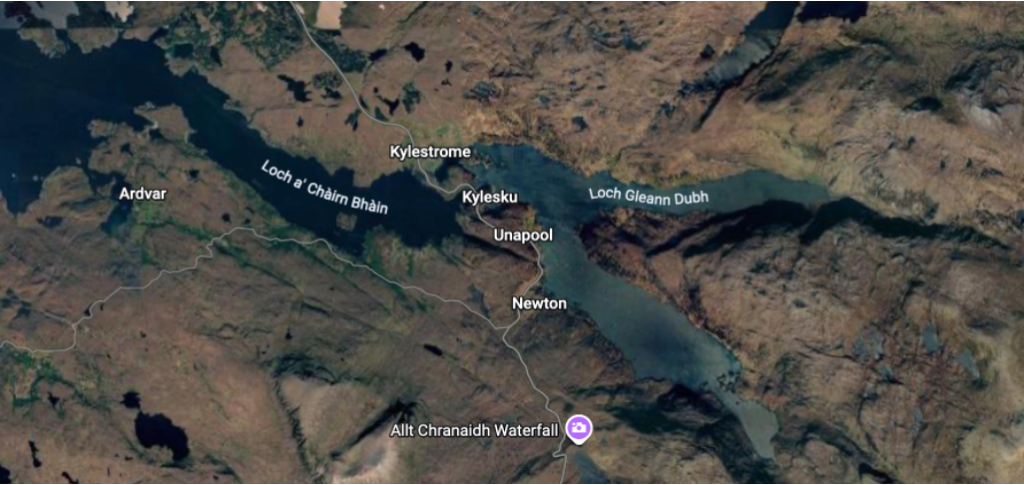
During the war, the base was known by the code name Port HHZ and operated under strict secrecy.
Port HHZ – A secret naval training base hidden in one of Assynt’s most remote sea lochs.
Training for dangerous missions
Throughout 1942 and 1943, Loch Cairnbawn became a centre of intense secret activity.
Crews lived and trained here, often in simple huts or aboard support vessels anchored in the loch.
Training included:
- underwater navigation and endurance;
- approach and evasion drills;
- training against boom defences and nets;
- placing charges and practising escape techniques;
- round-the-clock exercises in all weathers.
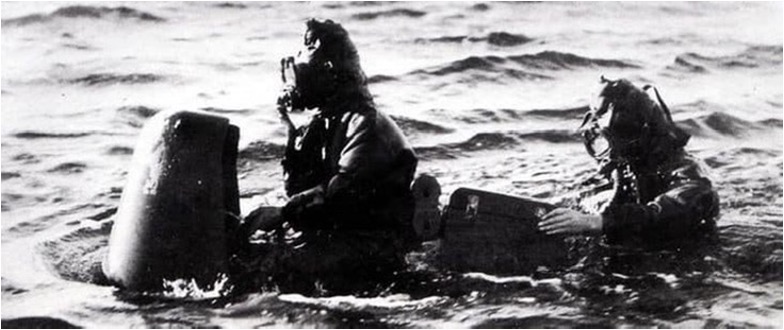
The skills learned here would later be tested in some of the Royal Navy’s most dangerous wartime operations.
Operation Source – the Tirpitz attack
In September 1943, six X-Craft — X5 to X10 — left Loch Cairnbawn and sailed for occupied Norway.
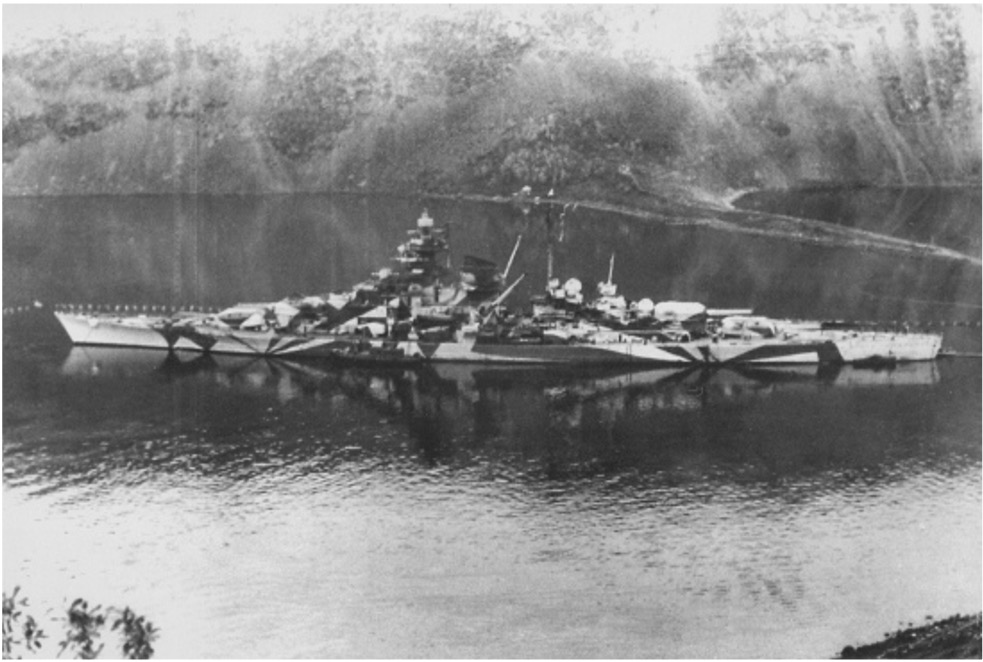
Their target was the German battleship Tirpitz, hidden deep in Kaafjord.
After completing their training at Port HHZ, the X-Craft began the long journey from Scotland towards Norway.
Each craft was towed by a conventional fleet submarine using a long towing cable. A telephone cable was incorporated into the tow so the crews of the two vessels could communicate during the passage.
The X-Craft normally travelled submerged while under tow, surfacing every few hours to ventilate the craft and recharge its batteries.
Because the journey itself was so arduous, a three-person passage crew was used before the operational crew took over nearer the target.
The losses
The journey and attack came at a heavy cost.
- X9 was lost while crossing the North Sea, together with all of her transit crew.
- X8 had to be abandoned after taking in water.
- X10 later suffered compass and periscope problems and was unable to continue with the attack.
- X5 was lost close to the Tirpitz with all hands and has never been located.
- X6 and X7 successfully laid their charges beneath the battleship, although both craft were discovered and had to be scuttled. Two members of X7’s crew died, while the surviving submariners were taken prisoner.
The result
The charges caused severe damage to the Tirpitz, putting the battleship out of action for many months.
The operation remains one of the Royal Navy’s most remarkable specialist operations of the Second World War.
The secret everyone knew about
Life around Loch Cairnbawn
Very little remains today to show that this peaceful loch was once one of Britain’s most secret naval establishments.
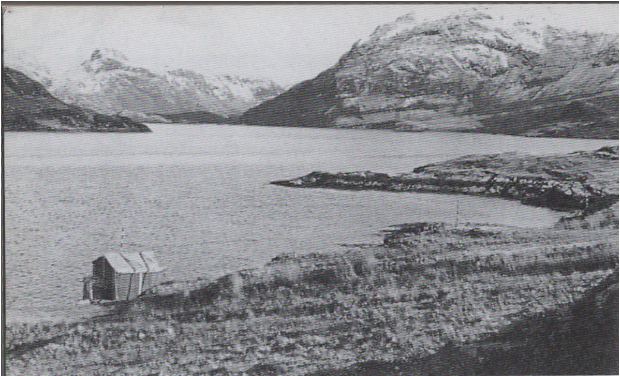
The hut was possibly a hydrophone or cable station?

But the arrival of hundreds of Royal Navy personnel had a major impact on the surrounding communities.
In 1943, people around Loch Cairnbawn suddenly found themselves living alongside an unusual and highly secret military presence.
Although strict security meant little information could be shared, local people became accustomed to naval personnel, supply convoys and strange activity around the loch.
Behind the secrecy, friendships developed between servicemen and the communities that welcomed them.
A community memory
During a recent Historic Assynt community roadshow in Drumbeg, a local resident recalled her mother telling her about submariners coming into the village for dances, the shop and the pub.
Another story recalls a naval officer stationed at Port HHZ who met and married a local woman. After the war, the couple are remembered as returning regularly to Drumbeg for holidays, maintaining a lifelong connection with the community.
Historic Assynt is continuing to research this story.
Security regulations meant few questions were asked, and even fewer answers were given. Long after the war, some local people did not speak about what had happened around the loch.
That makes surviving memories particularly valuable today.
A lasting legacy
A memorial near Kylesku Bridge commemorates the officers and men of the 12th Submarine Flotilla, whose training in these waters helped shape one of the Royal Navy’s most important specialist operations.

The memorial was restored in 2024 following a fundraising project led by retired Royal Navy commander Tim Honnor.
The memorial provides a visible link between the quiet landscape of Loch Cairnbawn today and the intense wartime activity that once took place here.
The next chapter of research
Historic Assynt is continuing to investigate the wartime landscape and the stories associated with Port HHZ.
Our next areas of work include:
- Landscape survey
Identifying and recording surviving wartime features around Loch Cairnbawn, including possible jetties, tracks, building platforms and other military infrastructure.
- War Department and Admiralty records
Researching government and naval archives to better understand the construction, operation and daily life of Port HHZ.
- Archaeological investigation
Comparing historic maps, aerial photographs and modern survey evidence to identify and interpret surviving remains.
- Sharing the story
Working with the community to develop exhibitions, educational resources and digital material that can bring the hidden history of Loch Cairnbawn to a wider audience.
Come along to our event at The Rock Stop on Saturday 19 September 2026, and help us learn more!
Can you help?
Much of the story of Loch Cairnbawn’s wartime past may still survive within the local community.
Historic Assynt would like to hear from anyone who has:
- family memories of wartime activity around Drumbeg, Nedd, Kylesku, Unapool or Loch Cairnbawn;
- photographs, letters, documents or newspaper cuttings;
- stories of naval personnel, temporary camps, local workers or military movements;
- memories passed down through families;
- information about surviving wartime features in the landscape.
These personal accounts and community memories could help us build a much fuller picture of what happened here, how the naval base affected local life and how those events were remembered afterwards.
Stories still to be told
Every memory, photograph and family story could add another piece to Assynt’s secret wartime history.